
Community Conversations: Creating Space for Connection, Resilience, and Stability
Dec 18, 2025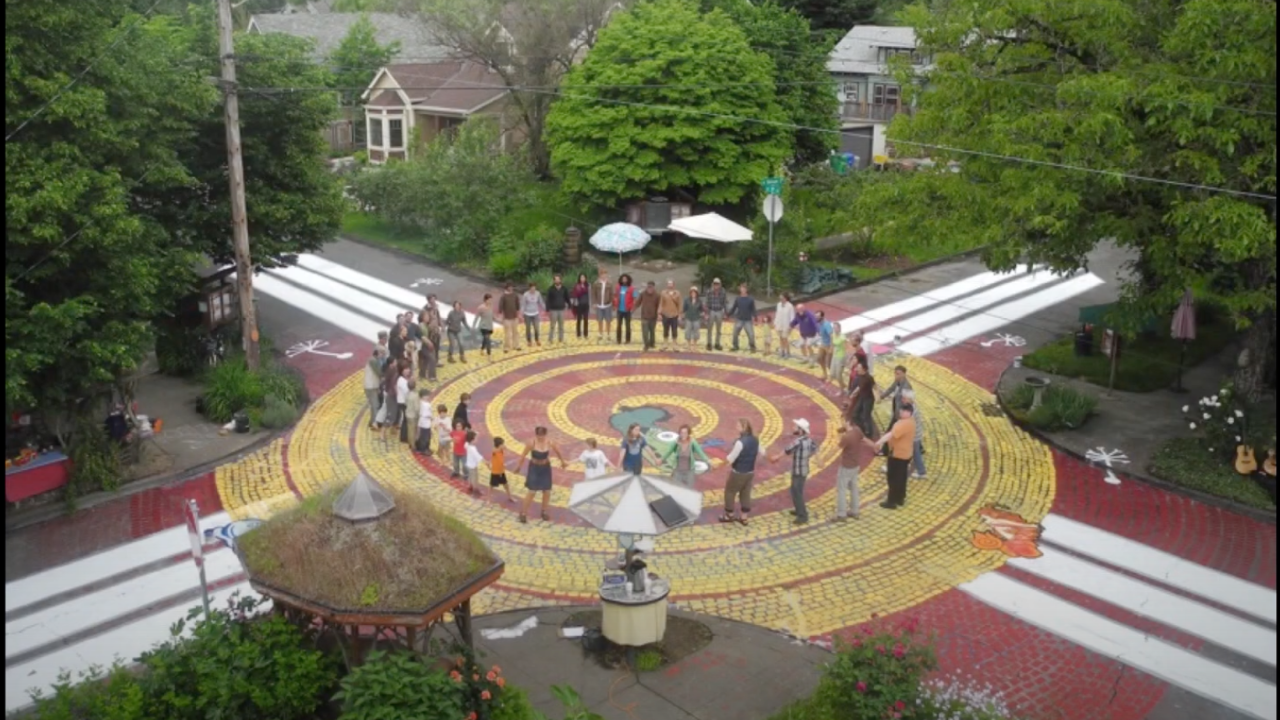
There’s a quiet epidemic of loneliness and despondency spreading across the U.S. Some cynics argue it’s by design—isolated people are easier to distract, divide, or co-opt. Others say it’s simply the byproduct of “efficient” land use and modern economic structures. Whatever the cause, the outcome is familiar: cities laid out in neat grids, optimized for movement and productivity, but oddly short on places to be together. Few shared spaces. Fewer reasons to linger. Even fewer invitations to talk. And fewer opportunities for the kinds of conversations that build trust, connection, and stability over time.
So where do people gather for real connection and conversation?
Why Place Matters for Community Connection
In many neighborhoods—including mine—there aren’t obvious places for neighbors to meet, learn one another’s names, or discover what they share beyond a zip code.When places for gathering are absent, the conversations that support social cohesion, mutual care, and collective problem-solving become harder to sustain.
Conversations Worth Having reminds us that culture is created in everyday interactions. It is shaped moment by moment through the questions people ask, the stories they share, and the way challenges are framed. Without shared places to gather, those generative conversations have fewer chances to take root.
Community Conversations During Times of Change
At a time of ongoing systems change and uncertainty, place-based community conversations are essential for resilience and stability. Communities need accessible spaces—both physical and relational—where people can talk about:
-
What matters most right now.
-
What people care about and are concerned about.
-
What’s working and what’s needed.
-
What might be possible if they leaned toward one another.
These kinds of conversations strengthen community capacity, support adaptive responses, and foster a sense of shared responsibility for the wellbeing of the whole.
Reclaiming the Public Commons: Community Conversations in Portland
Mark Lakeman of Portland, Oregon is demonstrating what’s possible when communities intentionally reclaim the public commons as shared gathering spaces. His TEDx talk, Badass democracy – reclaiming the public commons, is clever, hopeful, and deeply practical. In it he offers examples of how small, local design choices can invite connection. One of his most powerful ideas is deceptively simple:
transform neighborhood crossroads into places for community conversation.
Circles instead of straight lines.
Benches, tables, and small libraries.
Beauty that invites people to pause, notice one another—and talk.
These spaces don’t require formal programming. They create the conditions for organic community conversations to emerge naturally.
Organic Community Conversation in Moments of Disruption
We’ve seen this happen organically after crises, like floods, fires, and hurricanes. In Asheville, after Hurricane Helene, fallen trees blocked roads and created unexpected gathering points. People showed up with water, Wi-Fi hotspots, and battery-powered radios. Neighbors met neighbors. Needs were named. Help was offered. Conversations emerged—not because anyone planned them, but because people had a shared space and a shared purpose. For a moment, we experienced what happens when people slow down, look at one another, and engage in conversations that actually matter.
Some of those connections lasted. Others faded as routines returned and daily demands reasserted themselves. Even so, they revealed what is possible when people have space to gather and talk.
Community Stability Without Perfect Infrastructure
Even without formal gathering places, communities continue to demonstrate what’s possible. During the government shutdown, when SNAP benefits were abruptly cut, people organized quickly to support neighbors in need. No perfect infrastructure. No elaborate plan. Just people connecting, asking generative questions, and acting together.
This is the essence of place-based community conversation: when people have space—physical, emotional, relational—to talk openly about needs, hopes, and possibilities, communities become more resilient, responsive, stable, and humane. The question before us isn’t whether community is possible. It’s whether we are willing to intentionally create places—and cultivate the conversations—that allow connection, resilience, and stability to evolve in ways that allow all of us to flourish into the future.
