
Real Community Engagement: What It Actually Means (Beyond Surveys & Forms)
Sep 21, 2026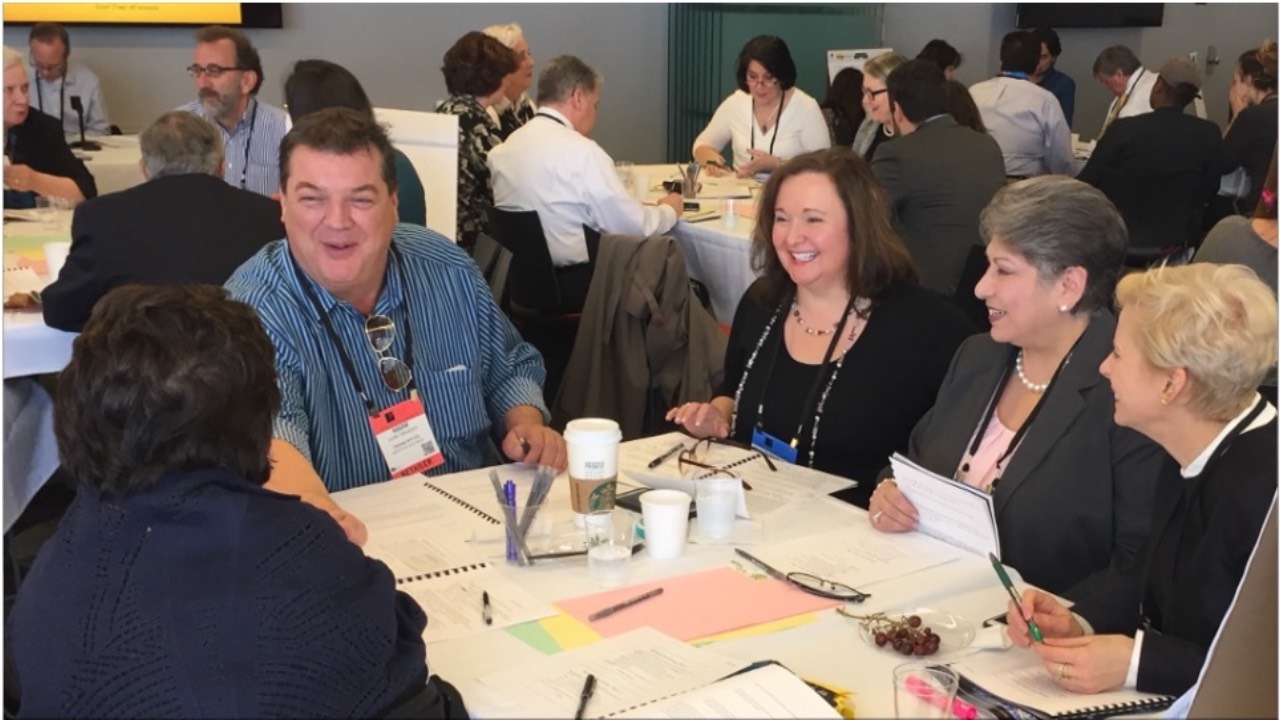
Civic leaders get told — sometimes gently encouraged, sometimes required by a grant — to “engage the community.” But what does that actually mean in practice? For anyone who hasn’t participated in a well-facilitated whole-system engagement process, it usually shakes out to one of these:
What “Community Engagement” Usually Looks Like
- A survey goes out to residents.
- An open forum where leaders present a plan and take questions from the audience.
- A city plan posted online with a public comment window.
- A charrette: someone explains the plan, calls for input, people raise hands one at a time, rows of chairs.
The first three check a box. But is anyone really engaged? The charrette gets closer — there’s at least a room and a conversation — and still, something’s missing. If leaders genuinely want engagement, not just the appearance of it, the first move is getting clear on what the phrase actually means.
What Community Engagement Means
A few definitions worth sitting with:
- Community engagement works as “a catalyst for changing policies, programs, and practices.” — CDC/ATSDR, Principles of Community Engagement
- It’s meant to empower communities toward better health and development outcomes, not just inform them. — Renata Schiavo, Health Communication
- And maybe most pointedly: real engagement isn’t informing, surveying, or collecting input on something already designed elsewhere. It’s recognizing that every community member is an expert in their own community, and building toward real ownership — of the work, the design, the evaluation, all of it. — Schiavo, Journal of Communication in Healthcare, 2021
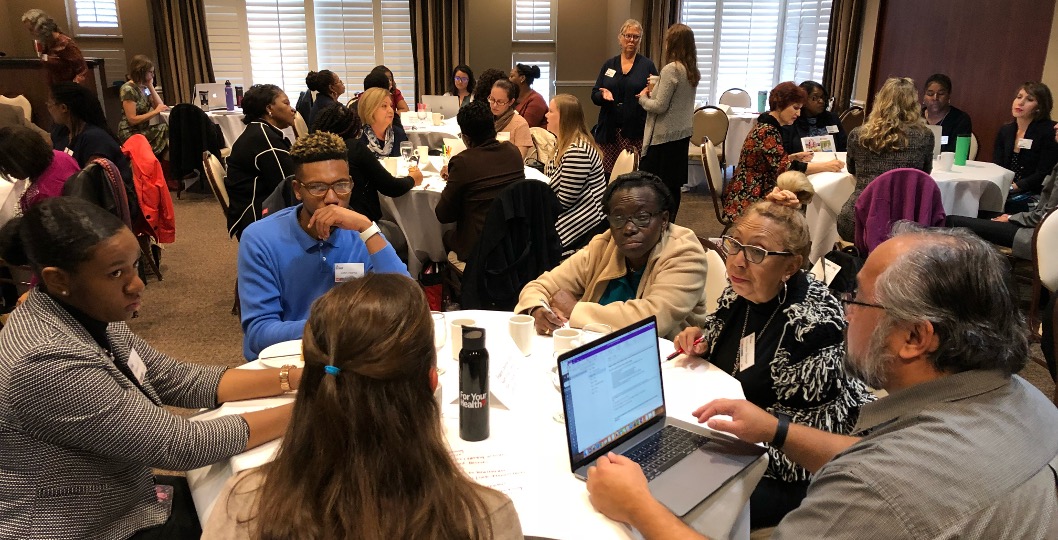
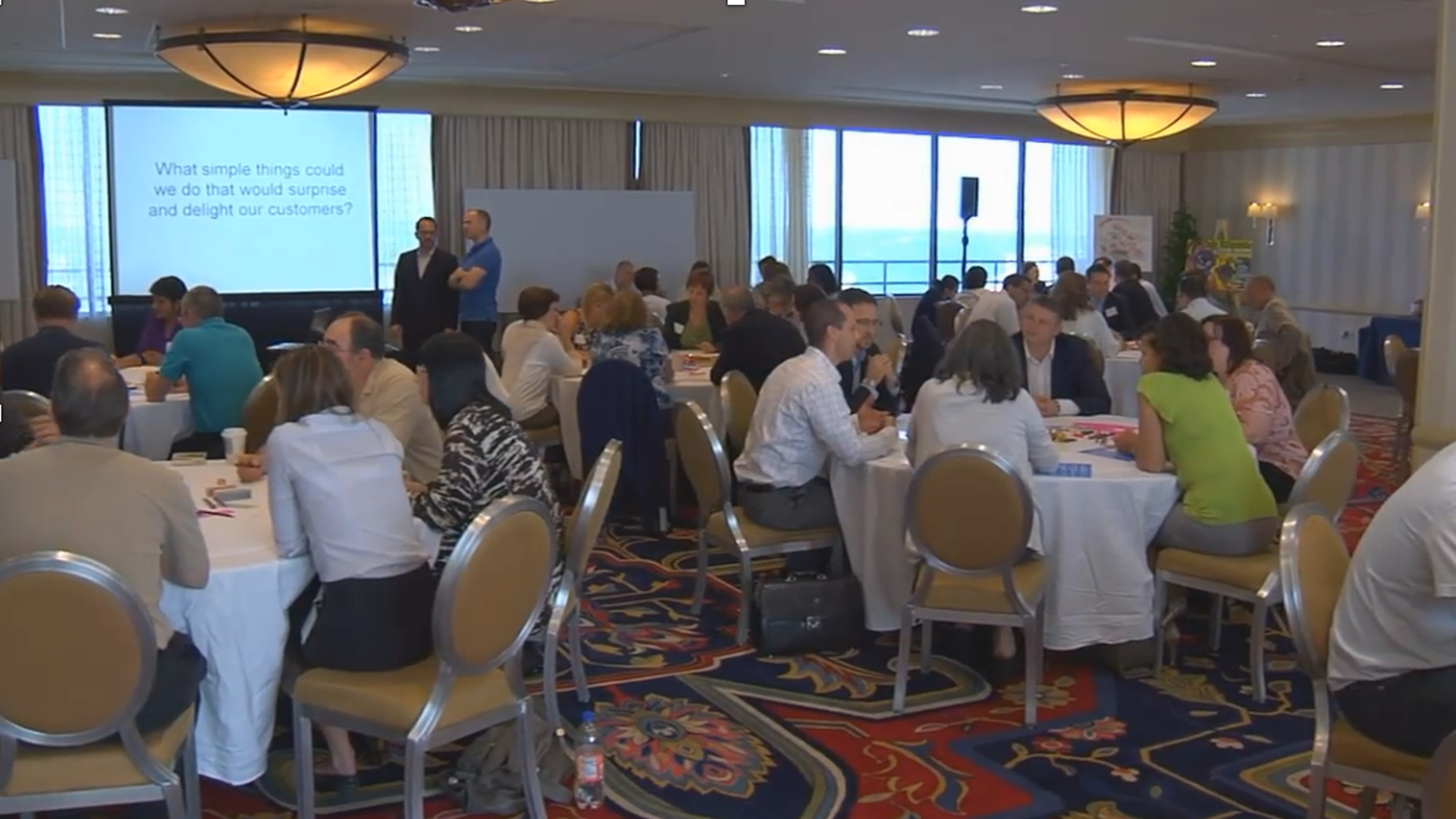
Real engagement means a facilitated process where people actually talk to each other — small groups, meaningful questions, real stakes. Done well, those conversations don’t just gather opinions. They generate something: shared understanding, and a shape for what the community wants to move toward together.
Why Real Engagement Works — and Why Leaders Fear It
Here’s the thing — anyone who’s been in a well-facilitated community conversation gets why this matters. It’s almost hard to understand the resistance. But if you haven’t experienced one, the hesitation makes sense too: it looks like a loss of control. Maybe chaos. Maybe an open door to anarchy. In practice, it’s the opposite. Good design creates the conditions for collaboration, sharper solutions, real ownership, and — maybe the quiet win nobody puts on the grant application — deeper trust between leaders and the people they serve.
Facilitation Approaches That Support Real Engagement
Do you have skilled whole-system facilitators in your community? Here’s a short list of approaches worth asking about. The link will show you the process in action.
What Successful Community Engagement Requires
A few things tend to separate the engagement that works from the engagement that’s just theater:
- Leaders willing to actually share power, not just the mic.
- A facilitator who knows what they’re doing.
- A design that’s co-created, not handed down.
- A process that fits the context and the outcome you’re actually after.
- A topic framed around what you want — not what you’re trying to avoid or eliminate.
- Generative questions that open things up instead of narrowing them down.
- Outcomes the whole room can call theirs.
- And leaders and citizens both ready to walk forward on those outcomes together.
Learn to Facilitate Community Conversations
If you'd like to learn more about facilitating whole systems engagement, register for a Conversations Worth Having course. Our CWH Foundations Course offers the basics of framing conversations and crafting generative questions; the Conversation Bootcamp is a deeper dive into framing and generative questions. Our Strategic Conversations Bootcamp provides an introduction to three engagement processes: Appreciative Inquiry, World Café, and Open Space Technology. Interested in bringing in a facilitator or training a cohort in your community? We have skilled and experienced facilitators through the US, Canada and in other parts of the world. Contact us today.
Frequently Asked Questions
What is the difference between community engagement and public input?
Public input processes — surveys, open forums, comment periods — collect reactions to decisions made elsewhere. Real community engagement is different: it invites residents into the design, implementation, and evaluation of the work itself, so the outcome is co-owned rather than just commented on.
What are examples of true community engagement?
True community engagement uses facilitated, whole-system processes such as Appreciative Inquiry, World Café, Future Search, Open Space Technology, and The Art of Hosting. These bring civic leaders and residents into small-group conversations designed to generate shared understanding, emergent knowledge, possibilities, and shared ownership of outcomes.
Why do civic leaders sometimes avoid genuine community engagement?
Leaders unfamiliar with whole-system engagement often assume it will lead to loss of control or chaos. In practice, well-designed engagement produces the opposite: better solutions, stronger community ownership, and deeper trust between leaders and residents.
What makes a community engagement process successful?
Success depends on leaders willing to share power, an experienced facilitator, a co-created design, a process suited to the context, a positively framed topic, generative questions, and tangible outcomes that both leaders and citizens are ready to act on together.
